Contact our free advice line on
 Login
Login

Schools and Aged Care
The Value and Importance of Air Purifiers in School Classrooms and Aged Care

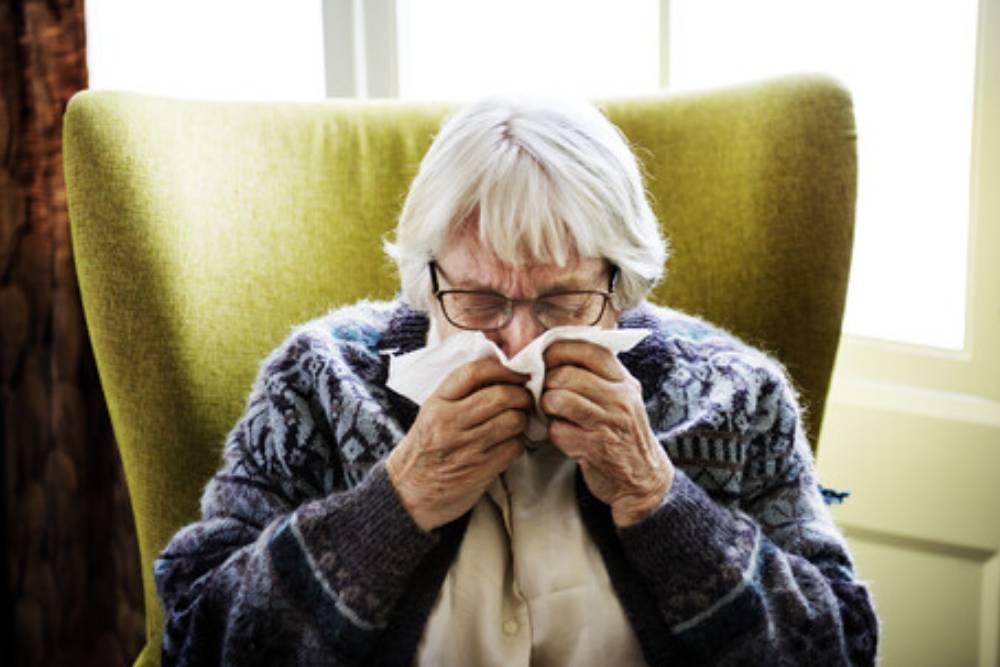
As a school or aged care administrator, it’s your job to oversee important decisions that make for a healthy learning and living environment. COVID made us think differently about indoor air quality (IAQ), and we learned how quickly deadly viruses spread, especially in schools, day care and aged care facilities.
Luckily, we can drastically and easily improve indoor air quality. Even before the SARS-CoV-19 pandemic, IAQ has been a growing health concern in schools. We understand its significant impact on both health and comfort.
These essential qualities foster an optimal environment for children to learn and staff to teach. Air purifiers help these institutions improve IAQ to provide a better, healthier environment for young minds to focus and absorb curriculums and the elderly spend their later years breathing quality air.
Currently PAA is working closely with various Indoor Air Quality agencies researching the importance of indoor air quality for our children and elders, the impacts of poor air quality, and the best air purifier for your chosen area.
Significance of Indoor Air Quality for Children at School
Children in Australia generally spend around 1,000 hours at school every year from the age of around 5 through to becoming a teenager, often even longer. Therefore, up to eighty percent of their growing and developing years are spent in school and in OUR care?
Since COVID, we understand the importance of IAQ for overall health and to limit spreading germs. Even the American White House made it a top priority with The American Rescue Plan: $122 billion for the ARP Elementary and Secondary School Emergency Relief (ARP ESSER) Fund.
It’s time to invest in your students, staff and school’s future, and air purifiers make that achievable.
PAA is passionately dedicated in Improving indoor air quality for our children and elderly, THE MOST IMPORTANT YEARS OF OUR LIVES!
It has never been more important or simple
IF IT ISN’T, why isn’t IAQ in your school or aged care centre a priority? If you researched SBS (Sick Building Syndrome), VOC’s (Volatile Organic Compounds), Indoor Mould, which usually can’t even be seen. The detrimental health effects by breathing mould spores is MIND BLOWING!! Search and watch the documentary “MOLDY” It answers to a lot of unanswered questions for everyone. The illness’ caused by mould growth is often undiagnosable by Medical Practitioners.
Poor IAQ has known negative health impacts and often severely heightened in children and the elderly.
Symptoms of Poor Indoor Air Quality Include:
- Headaches
- Sinus Congestion
- Dizziness
- Fatigue
- Coughing
- Nausea
Children have a higher metabolic rate, meaning they breathe faster. So, if your school has poor IAQ, all those little lungs inhale harmful toxins at a faster rate than your adult staff.
One study links higher levels of NO2 (nitrogen dioxide) to more student absences. Health and learning go hand in hand with our children.
For the full list and more information, you can check out the Environmental Protection Agency (EPA)’s article, “Why Indoor Air Quality is Important in Schools.”
Impacts of Poor Indoor Air Quality in Schools You Want to Avoid
Building structure, as well as ventilation capabilities, massively impact indoor air quality. We know administrators, like yourself, can only do so much with what your district must work with. Let’s explore a few costly issues around poor IAQ.
Costly Repairs:
Funding to update an entire HVAC system for your school or aged care canter can feel insurmountable. Air purifiers offer a more affordable option to filter and clean the air. They can be conveniently placed in individual classrooms and offices for a targeted, budget-friendly alternative to costly repairs.
Staff Satisfaction:
You know how much stress your teachers and staff manage every day. The little things add up, and higher satisfaction keeps your business running efficiently.
Poor IAQ affects all of us. You read the symptoms children experience; adults suffer from IAQ related health issues also. Staff need to breathe quality air to be at their best. Staff non-attendance is obviously a huge and regular cost incurred by any business, but even more so when you have containment of multiple contributors of illness in the one area.
Allergy Flare-Ups
Both children and adults suffer from a range of different types of allergens. Generally, more prominent in our younger and older years. School environments can cause allergic reactions from School supplies, Cleaning products, Dust, Polen, Chemical fumes from Paint or Science labs, Poorly serviced HVAC systems, Smoke from fires, Unflued gas heating, Materials off gassing…………..the list is long.
Removing harmful irritants and toxic particulates makes an instant noticeable difference. Providing filtered clean air reduces allergy symptoms and allows higher productivity for staff and student focus. Just like a healthy breakfast before another long day in classrooms.
When it comes to having a healthy learning environment, our kids deserve nothing but the best. With the amount of time children and staff spend at school, clean air remains an investment in the future.
Olansi Air Purifiers Enhance Your School
High-quality air purifiers serve as a sure way to easily and quickly improve your school’s and aged care IAQ. Imagine being able to boast to a parent or sibling the length your business is going too, to ensure the child’s or relative’s surroundings and as healthy as possible no matter the cost.
PAA is striving to fulfil the demand of schools and aged care centres all over the nation. Help us, Help you, in keeping your staff, students and residents in good health when in your care by choosing the best Air Purification products and service available.
What Using an Air Purifier Every Night May Do for Your Sleep and Blood Pressure
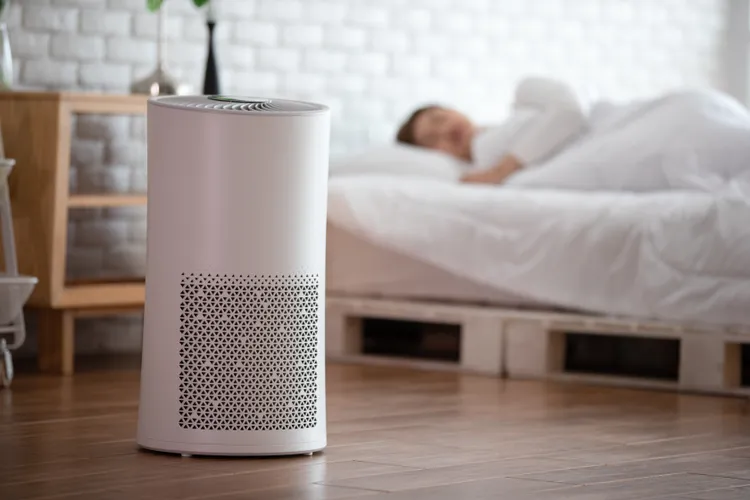 As scientists continue to learn more about the risks associated with indoor air pollution—including effects on blood pressure and sleep—it may seem like using an air purifier overnight would be a simple solution. But what impact does running an air purifier nightly actually have on these aspects of health? Here’s what to know.
How a Nightly Air Purifier Could Affect Sleep
There’s good reason to believe that sleeping with a nightly air purifier may improve both sleep quality and duration.
The bulk of past scientific literature focused solely on air pollution’s negative effects on sleep apnea, finding that it triggers upper airway irritation and edema (swelling of body parts), explained Thomas Kilkenny, DO, the director of the Institute Sleep Medicine at Northwell Health’s Staten Island University Hospital. More recent studies, however, have examined the connections between indoor air quality and sleep more generally, and the results have been consistent. “In general, they have shown that the cleaner the air quality in the bedroom, the better the quality of sleep,” Kilkenny said.
A study published in 2023, for example, found that people who slept with a HEPA air purifier, which can remove 99.97% of dust, pollen, mold, and bacteria from the air, slept longer and spent more time in bed compared with those who didn’t use a HEPA air filter.
How a Nightly Air Purifier Could Affect Blood Pressure
Research suggests that regular exposure to air pollution can cause inflammation and impair blood vessels, eventually raising blood pressure and the risk of adverse cardiac events like heart attack or stroke, said Sabrina Islam, MD, MPH, FACC, FAHA, FASE, an associate professor of medicine in the section of cardiology at the Lewis Katz School of Medicine at Temple University.
On the flip side, she added, studies have linked the use of an air purifier with improved blood pressure levels. This is particularly true for people living in areas with heavier pollution, such as those with high traffic, poorly ventilated spaces, or places prone to smog or wildfires.
A 2021 meta-analysis examined studies measuring the systolic blood pressure of people living in higher-pollution areas before and after using an air purifier—some in their bedrooms—for periods generally ranging from a week to several weeks. It found that, on average, using an indoor air purifier significantly decreased blood pressure.
Another paper, published in 2024, found that using an indoor air purifier in the main activity room for a year was linked to a large drop in diastolic blood pressure among older adults.5
Xia X, Chan KH, Kwok T, Wu S, Man CL, Ho KF. Effects of long-term indoor air purification intervention on cardiovascular health in elderly: a parallel, double-blinded randomized controlled trial in Hong Kong. Environmental Research. 2024;247:118284. doi:https://doi.org/10.1016/j.envres.2024.118284
“Filtering systems are able to reduce exposure to outdoor and indoor sources of air pollution, thus reducing the development or worsening of cardiometabolic disorders, including hypertension,” Islam told Health.